

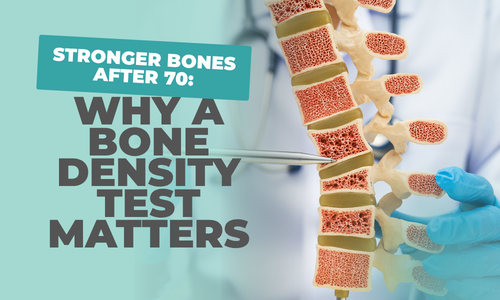
Staying active and independent is important at every stage of life. After age 70, looking after your bone health becomes especially important. Bones naturally lose strength over time, which increases the risk of fractures from even minor falls.
A bone density test is a simple way to check your bone health and take early steps to prevent problems.
What Happens to Bones as We Age?
Bone is living tissue that constantly renews itself. As we get older, this process slows down. Bone loss can happen faster than bone rebuilding.
This can lead to:
- Reduced bone density.
- Increased fragility.
- A higher risk of fractures.
Fractures of the hip or spine can significantly affect mobility and independence, which is why early detection is so valuable.
Osteoarthritis vs Osteoporosis: Understanding the Difference
These conditions are often confused but affect the body in different ways.
Osteoarthritis
- A condition of the joints.
- Caused by wear and tear of cartilage.
- Leads to pain, stiffness, and reduced movement.
- Common in knees, hips, and hands.
Osteoporosis
- A condition of the bones.
- Causes bones to become thin and fragile.
- Often has no symptoms until a fracture occurs.
- Commonly affects the hip, spine, and wrist.
Put simply: osteoarthritis affects how joints move, while osteoporosis affects how strong your bones are.
Why Bone Density Testing Matters
Osteoporosis is often called a “silent condition” because it develops without noticeable symptoms.
A bone density test can:
- Detect early bone loss.
- Estimate your risk of fracture.
- Help your GP guide treatment if needed.
- Monitor bone health over time.
Identifying issues early allows for effective management and helps reduce the risk of serious injury.
What to Expect from a DEXA Scan
A DEXA scan is the most accurate and widely used test for measuring bone density.
The procedure is:
- Quick, usually completed within 10–15 minutes.
- Painless, with no needles or discomfort.
- Non-invasive, you simply lie still on a table.
- Low radiation, lower than a standard X-ray.
The scan focuses on the hip and spine, where fractures are most likely to occur.
Medicare Support for Patients Over 70
In Australia, Medicare subsidises bone density testing for people aged 70 and over. This makes it easier to access this important screening as part of your routine healthcare.
Your GP can advise whether a DEXA scan is appropriate and provide a referral.
Supporting Your Bone Health
In addition to testing, there are practical steps you can take to maintain strong bones:
- Stay active with regular weight-bearing exercise such as walking.
- Ensure adequate calcium intake.
- Maintain healthy vitamin D levels.
- Avoid smoking and limit alcohol intake.
- Discuss medications and fall risk with your GP.
If you are over 70 or have concerns about your bone health, we encourage you to speak with your GP. A simple test today can help prevent fractures and support your long-term wellbeing.
Contact our clinic on 03 9699 1088 to arrange a consultation or discuss whether a bone density test is right for you.